Hypoallergenic Dog Food, Itchy Skin and Fussy Eating: How to Find the Right Food for Your Dog
If your dog is scratching, licking their paws, eating grass or turning their nose up at dinner, you’re probably feeling worn out.
You may have read hundreds of ingredient lists. You may have a cupboard full of bags, tins and treats your pooch refused, reacted to or simply stopped eating after a few days. Every new meal brings hope, and every untouched bowl brings another question.
Is it food? Is it pollen? Is it their tummy? Are they just fussy?
We understand. When your dog is part of the family, feeding them shouldn’t feel like guesswork.
The answer was never going to be another random bag from another shelf, because there isn’t one recipe that suits every dog. There is your dog’s recipe.
Start With the Signs
Your dog’s food may be worth looking at if you’ve noticed:
- Itchy, red or irritated skin
- Paw licking, face rubbing or repeated ear problems
- Loose stools, vomiting, gas or a sensitive stomach
- Eating grass more often than usual
- Low energy or changes in their usual bounce
- Not drinking enough water
- Refusing meals or eating only certain parts
- A sudden change in appetite or weight
These signs can have many causes. Persistent itching deserves a vet check, especially if your dog has sore skin, hair loss, wounds, repeated ear infections or ongoing tummy problems.
Food is one part of the picture. Your vet may need to check for parasites, infections, environmental allergies or other health concerns before you change your dog’s diet.
Food or the Environment?
Here’s the important bit: food cannot remove an allergy to pollen, dust mites or another environmental trigger.
A balanced diet can, however, support your dog alongside veterinary treatment. The right balance of nutrients, including essential fatty acids, can help support the skin’s protective barrier. Omega-3 fatty acids may also help reduce inflammation and itching for some dogs. Improvements can take time, sometimes up to eight weeks, so it’s worth following your vet’s advice and keeping a careful record.
Your dog’s system deals with what’s in the air and what’s in the bowl. If food sensitivities add to that load, everything else becomes harder.
Some dogs have both environmental and food allergies. A supervised elimination diet followed by careful reintroduction is one of the clearest ways to investigate whether a particular food is contributing to the problem.
This is why we look at the whole picture. We consider your dog’s environmental sensitivities, their previous meals, their symptoms and their individual routine, not just whether a packet says “hypoallergenic”.

What Does “Hypoallergenic Dog Food” Really Mean?
“Hypoallergenic” usually means a food is less likely to cause a reaction. But the word alone doesn’t tell you whether the recipe is suitable for your dog.
The meal’s balance matters more than how clean the words on the packet sound.
A good plan should consider:
- Which proteins your dog has eaten before
- Which ingredients may be possible triggers
- Your dog’s age, breed, weight and activity level
- Their digestion and stool quality
- Their skin and coat
- Their medical history and veterinary guidance
- How the meal will be kept complete and balanced
Fresh dog food can be a helpful option for some households because the ingredients and recipe are clear. But being fresh, organic or additive-free does not automatically make a meal right for every dog. The formulation matters.
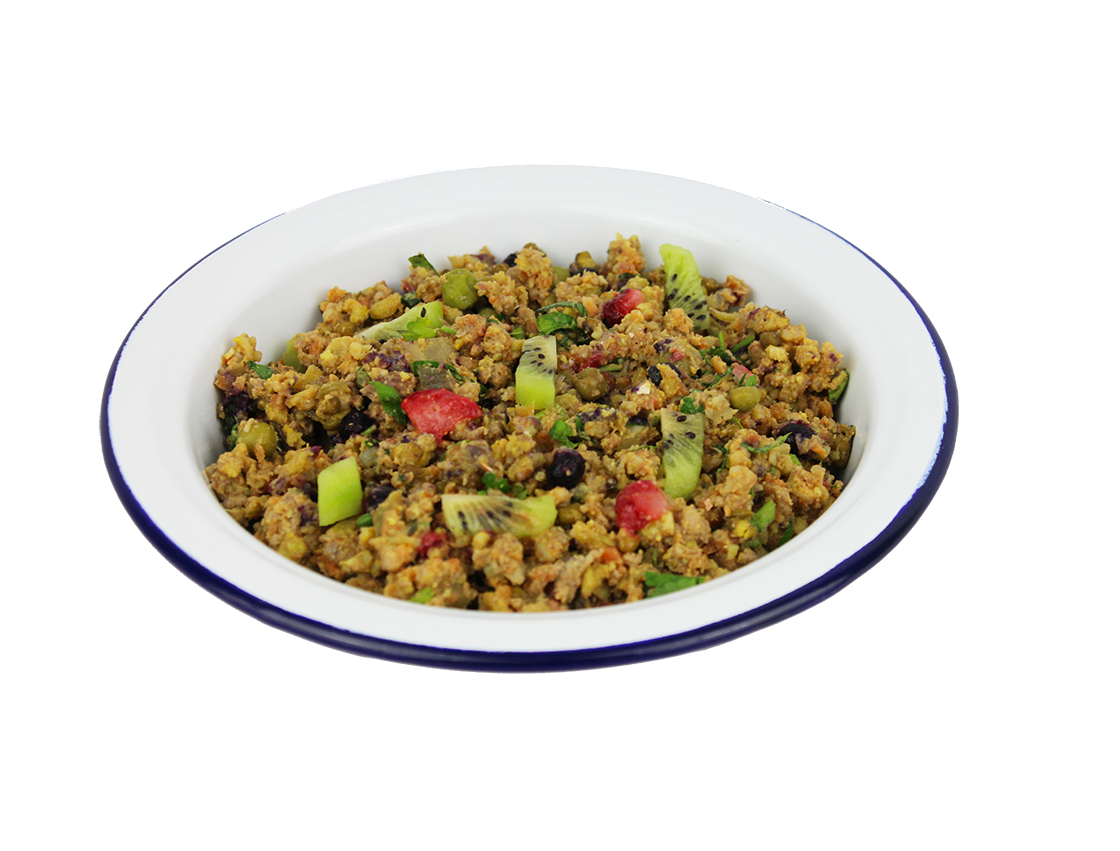
For example, a recipe might include minced turkey, lamb liver, courgette, peas, butternut squash, wild blueberries, kiwi, fresh parsley, salmon oil, flaxseed or coconut oil. The question is not simply whether each ingredient sounds appealing. The question is whether that combination suits your dog.
The Sensitivity Load
Think of your dog as carrying a total sensitivity load.
Environmental triggers may already be asking a lot of their body. If their meal also contains an ingredient they don’t tolerate, that adds another demand. Removing a genuine food trigger properly can leave less for their system to handle.
That does not cure environmental allergies. It does not replace medication or veterinary care. But it may make the overall picture easier to manage when food is part of the problem.
At Talula Eats, we pull meals apart ingredient by ingredient. We look at what your dog has eaten, what they may react to and what they need from their nutrition.
That’s the difference between choosing a general sensitive-stomach dog food and creating a plan around one very special pooch.
Why an Elimination Diet Matters
An elimination diet is a structured period where your dog eats a carefully selected recipe while possible triggers are removed. Ingredients are then reintroduced one at a time so you can observe what happens.
It needs to be consistent. Extra treats, table scraps and flavoured chews can make the results difficult to understand.
For dogs with ongoing gut issues, veterinary guidance often puts a proper dietary trial first. Some owners may see improvements in loose stools or other digestive signs within 10 to 14 days, although every dog is different.
Our elimination and reintroduction process runs for 30 days. This gives us time to observe your dog’s digestion, appetite, energy and comfort rather than making a snap decision after one dinner.
We’ll look at:
- What goes in: the selected ingredients and meal portions.
- What comes out: stool quality, frequency and any changes.
- How your dog feels: appetite, energy, itching and general behaviour.
- What happens next: careful adjustments and reintroduction where appropriate.
Fussy Eating Isn’t Always Bad Behaviour
Does your dog sniff dinner, walk away and then stare at you as though you’ve committed a terrible paw-crime?
You’re not alone!
Dogs have four classes of taste receptors: salty, sweet, bitter and sour. But smell is a huge part of how a dog experiences a meal. An unvaried bowl can become boring quickly, particularly for a pooch who is already sensitive to texture, scent or tummy discomfort.
So fussy eating is not always about being difficult. It can be about palatability, routine, previous reactions or the way the food has been formulated.
A tailor-made dog food plan gives us more to work with. We can consider your dog’s preferences while protecting the nutritional structure of the recipe. The goal is not to keep changing meals every few days. It’s to understand what makes your dog comfortable, interested and ready to tuck in.
Our Personalised Nutrition Plan
Our Personalised Nutrition Plan is designed for dogs who need more thoughtful guidance than a standard recipe can offer. If you’d like to see exactly how the testing and the 30-day process work, step by step, our guide to how the intolerance test and elimination diet work walks through the whole journey.
It includes:
- Intolerance and sensitivity testing by Pet Health Testing
- A 30-day elimination and reintroduction process
- Recipes tailored to your dog’s breed, weight, age, activity level and sensitivities
- Meals cooked by hand by our in-house canine chef and nutritionist
- Meals cooked and delivered on the same day in our Fitzrovia kitchen
- Food that is never frozen
- 30 days of ongoing consultation
- A 30-minute session with a canine behaviourist
- Compostable sugarcane pulp packaging
- A portion of every purchase donated to Dogs On The Streets for veterinary care and supplies for rough sleeper dogs in London
The testing gives us useful information to consider, but it doesn’t replace a veterinary diagnosis or a supervised dietary trial. We’ll always keep the advice practical, careful and centred on your dog.
After the first month, discounted plans are available to continue with your dog’s personalised recipe. You can choose a fresh dog food subscription that suits your household, whether your dog needs meals every week or a smaller number for occasional support.
Freshly Cooked, Carefully Considered
Freshly cooked dog food is not a magic answer. It is one practical way to make ingredients, portions and preparation easier to understand.
Our meals are prepared by hand, packed in compostable sugarcane pulp packaging and delivered on the same day. There’s no long wait in the freezer and no complicated preparation at home.
We may use ingredients such as turkey, lamb, liver, courgette, peas, pumpkin, butternut squash, wild blueberries, fresh parsley, salmon oil and flaxseed. Each ingredient has a reason for being there, and each recipe is considered in relation to the dog eating it.
That might mean gourmet dog food for a little London pooch who loves variety. It might mean a custom dog food recipe for a dog with sensitivities. It might mean a simple, carefully managed meal plan for a fussy eater with a tender tummy.
Different dog. Different needs. Different bowl.
A Calmer Way Forward
You don’t need another random food purchase. You need a clear next step.
Speak to your vet about persistent itching, ongoing diarrhoea, low energy, changes in drinking or anything that feels unusual for your dog. Then, if food may be part of the picture, bring us the details.
Tell us:
- What your dog eats now
- Which foods and treats they have refused
- When the itching or tummy signs began
- Whether symptoms change with the seasons
- What their stools, appetite and energy are like
- What your vet has already advised
This is not a miracle promise. It’s thoughtful guidance, careful observation and food designed around your dog.
Explore the Personalised Nutrition Plan, or tell us about your dog. We’d love to hear about your paw-pal and help you find a happier way through mealtimes!